
Skip the Fad Resolution: Make One Privacy Change That Lasts
Most New Year's resolutions fail by February. Here's how to make one privacy change that actually matters—three years from now.
PRIVACY BASICSPRIVACY CONCEPTS
12/24/20255 min read


It's that time again. The confetti's still on the floor, the gym is packed, and everyone's talking about their "new year, new me" goals. If we are honest withourselves though; how many of our previous resolutions have stuck? How many of them even mattered?
Only 9% of Americans actually keep their New Year's resolutions through the year. Researchers analyzing 800 million user activities even identified "Quitter's Day" (Jan 19th) as the date most people give up. That's less than three weeks in.
This year, let me suggest something different. Spoiler Alert the suggestion is not to simply avoid making resolutions. In fact, resolutions can be very powerful things when done right. What I'm suggesting is not a dramatic overhaul. Its not a list of 15 things you'll never do. I'm suggesting just one or two changes that'll still matter three years from now (and beyond).
Why Most Resolutions Fail
Here's why most resolutions don't stick: they focus on what feels urgent.
Lose weight. Get organized. Cut back on spending. These feel pressing because we see the consequences immediately—the tight jeans, the cluttered desk, the credit card statement. But there's a whole category of important things we ignore because they're not screaming for attention.
The Eisenhower Matrix (don't fall asleep on me, this will make sense) divides tasks into four quadrants based on urgency and importance. The insight? The most valuable work lives in Quadrant 2: important but not urgent.
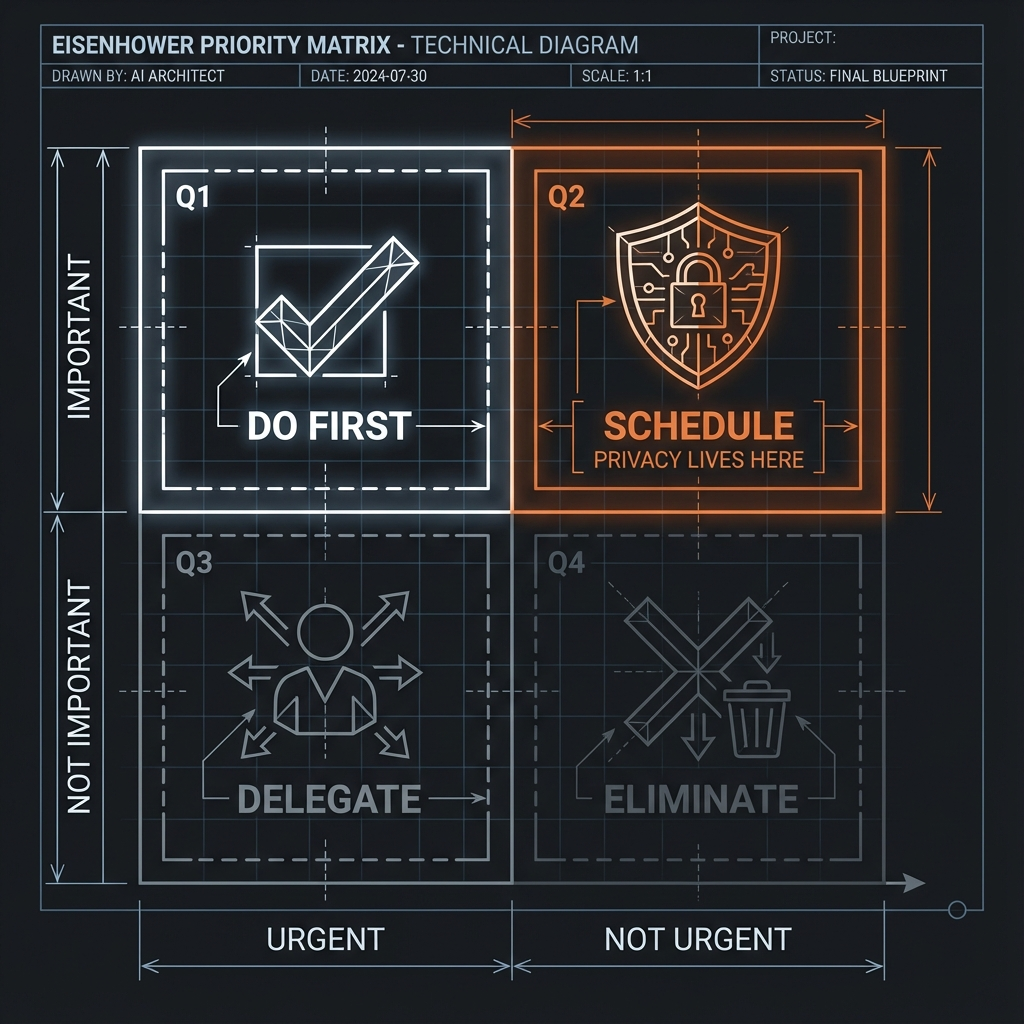
Your digital privacy lives squarely in Quadrant 2.
You know you should probably do something about it. You've heard about data breaches. You've seen the creepy ads that seem to read your mind. A recent survey found that 80% of people are uneasy about how their personal data is used. But nothing's on fire. It can wait until tomorrow.
Except, when privacy becomes urgent it's already too late to prevent the damage. The best time to plant a tree was twenty years ago. The second best time is today.
Think Like a Gardener, Not a Sprinter
Here's what actually works: forget the sprint. Think like a gardener.
Research from University College London tracked 96 people forming new habits and found something surprising. Habits take an average of 66 days to become automatic, not the "21 days" myth you've probably heard. Some habits took as long as 254 days. And here's the encouraging part: missing a day here and there didn't derail the process. Consistency matters more than perfection.
This isn't about a quick fix. It's about planting something that grows. Instead of asking "What can I accomplish this month, or this quarter, or this year", ask yourself: "What will matter in the next three to five years?"
And here's the good news: you don't need to overhaul everything. Pick one or two privacy changes. Make them small enough to stick, but meaningful enough to matter.
Four Privacy Changes Worth Considering
Here are four options—pick the one (or two) that fits your life:
1. Start Using Email Aliases
Services like SimpleLogin, Firefox Relay, or Apple's Hide My Email let you create unique email addresses for every signup. Your real email stays private. When a company gets breached, or quietly sells your data to advertisers, you'll know exactly who did it. And you can turn off that alias without touching your real inbox. This one change stops cross-site tracking, reduces spam, and gives you control over who actually has access to you.
Time to set up: 15-20 minutes
Long-term payoff: Every future account is protected
If you need help getting started, check out the blog post here
2. Delete Unused Social Media Accounts
That old Facebook profile you never check? That Twitter account from 2012? The MySpace page that somehow still exists? They're still collecting data. Still sitting there waiting for the next breach. Still part of your digital footprint. Deleting old accounts isn't just about tidying up, it's about reducing your attack surface. Less accounts means less exposure, less data floating around, and fewer passwords to worry about.
Time to set up: 30 minutes to an hour (depending on how many)
Long-term payoff: Smaller digital footprint, less breach exposure
3. Practice Saying "No"
"Can I get your phone number for the receipt?"
No thanks.
"What's your birthday?"
Leave it blank.
Get comfortable asking one simple question: "Is this actually required?"
Most of the time, it isn't. Retail stores, websites, and apps ask for personal information because they want it—not because they need it. The data you don't give away is the data that can never be leaked, sold, or misused. This isn't about being paranoid. It's about being intentional.
Time to set up: Zero—just a mindset shift
Long-term payoff: Less personal data scattered across databases
4. Be Intentional With New Devices
The holidays likely brought new tech into your home. Smart speakers. Fitness trackers. Kids' tablets. Gaming consoles. Before you rush through the setup, pause.
What data does this device collect? What's the bare minimum you can provide? Do you really need to connect it to your main email, or would a secondary account work? Skip the optional fields. Don't enable every "smart" feature just because it's there. Read the privacy settings before you click "I Agree." The few minutes you spend being intentional now save you from being tracked for years.
Time to set up: 10-15 extra minutes during setup
Long-term payoff: Less surveillance in your home
The Power of Consistent Progress
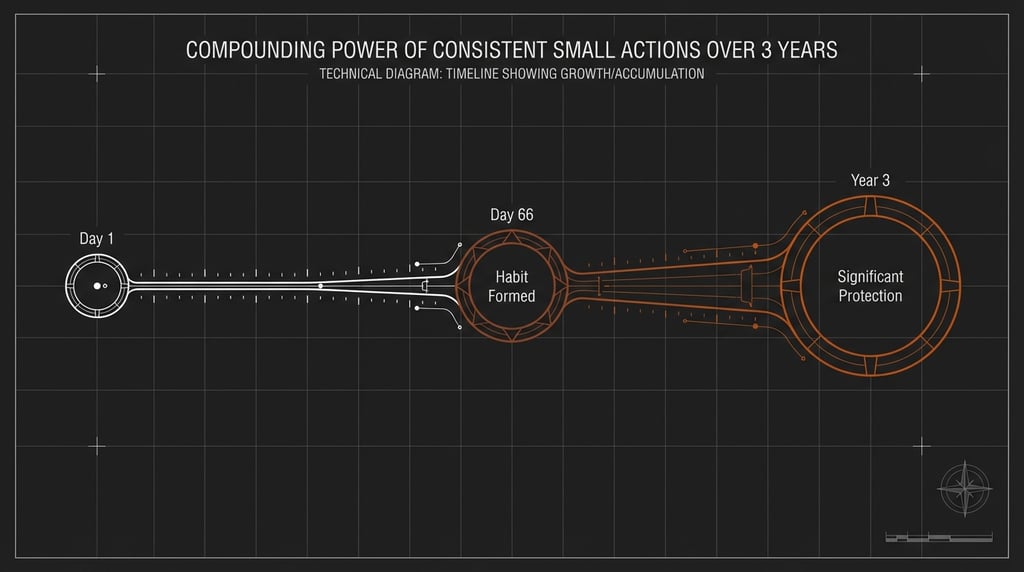
Here's what most people miss about resolutions: the goal isn't to be perfect in January. It's to be slightly better, consistently, for years.
A small privacy change made today and repeated for 66 days becomes automatic. A habit you don't have to think about anymore.
Multiply that across three years, and you've fundamentally changed how you interact with the digital world. Your data is more protected. Your family's information isn't scattered across dozens of databases. You've built something that lasts.
That's the resolution worth making.
Your One Thing
This year, skip the resolution that fizzles by February. Make one change that protects you and your family for the long haul. Privacy isn't urgent until it is. By then, the damage is done. But a small choice today, repeated consistently, grows into something that matters three years from now. Your digital life should reflect the same values as your physical life. If you lock your doors and protect your kids in public, why not online too?
Here's your challenge: Pick one privacy change from the list above. Write it down. Give yourself 66 days to make it a habit. Important, not urgent. Long-term, not flashy. That's the resolution that sticks.
Sources:
- Resolution success statistics: Ohio State University research
- "Quitter's Day" study: Strava analysis of 800 million user activities
- Habit formation timeline (66 days): University College London / Phillippa Lally research
- Data privacy concerns (80%): Checkr 2024 Digital Privacy Survey
- Eisenhower Matrix framework: Productivity methodology based on Dwight D. Eisenhower's prioritization principles
Privacy Made Simple
Simple tips for protecting your online privacy.
© 2025. All rights reserved.